
Responsible Monitoring: Safety + Trust (2026)
Quick answer: Responsible monitoring means using parental supervision tools inside a trusting relationship — not instead of one. Talk first, set clear expectations, monitor transparently, and loosen the controls as your child proves ready. The goal was never surveillance. It’s raising a young adult who doesn’t need it.
Every monitoring app on the market will tell you what it can track. Almost none will tell you how to use that power well.
That’s the gap this page exists to fill. It’s our manifesto — the philosophy behind everything we publish. If you take one idea from our entire site, make it this one: monitoring works best when your child knows about it, understands why, and experiences it as protection rather than punishment.
This isn’t softness. It’s strategy. Secret surveillance of your own teenager might feel effective in the short term, but it teaches them to hide better — from you. Transparent monitoring teaches them to navigate wisely — with you. One of those outcomes lasts into adulthood. The other expires the day they get their own phone plan.
What Responsible Monitoring Actually Means
Let’s define it plainly, because the phrase gets thrown around:
Responsible monitoring is parental supervision of a child’s digital life that is:
- Legal — your minor child, your device or family plan, within your jurisdiction’s rules. (See our legal guide.)
- Transparent — your child knows monitoring exists and understands broadly what it covers.
- Proportional — matched to the child’s age, maturity, and demonstrated judgment. A 9-year-old and a 16-year-old don’t get the same settings.
- Conversation-first — the talk comes before the tool, and keeps coming after.
- Temporary by design — the controls loosen over time, with the explicit goal of outgrowing them.
Notice what’s not on the list: secrecy, punishment, catching them red-handed, or monitoring as a substitute for parenting. Those aren’t monitoring strategies. They’re relationship strategies — bad ones.
The test we suggest: could you explain your monitoring setup to your child, calmly, without embarrassment? If yes, you’re probably doing it right. If the thought makes you uncomfortable, something in the setup — the secrecy, the scope, the motive — needs rethinking.
Conversation First, Monitoring Second
Here’s the order of operations that actually works:
Step 1: Talk. Before installing anything, have the conversation. Not a lecture — a conversation. “You’re getting more independence online, and with that comes some risks. Here’s how we’re going to handle it together.”
Step 2: Agree on the rules together. Especially with teens, co-created rules get followed far more than imposed ones. “What do you think is a reasonable bedtime for the phone?” You’ll be surprised how reasonable they are when they’re part of the process.
Step 3: Introduce the tool as backup, not as the enforcer. “We have monitoring on your phone. It’s there so I can help if something goes wrong — not so I can read every message. I won’t check it daily. I’ll check if I have a reason to worry, and I’ll tell you if I do.”
Step 4: Keep talking. The initial conversation isn’t a one-time event. Check in monthly: “Anything weird happen online lately? Anyone bothering you or a friend?” The tool catches what conversations miss. Conversations catch what tools can’t — context, feelings, the stuff that matters.
Step 5: Loosen over time. This is the part most parents skip, and it’s the most important. Every birthday, every demonstrated good judgment, should come with a little more freedom. Monitoring that never loosens isn’t protection — it’s control.
Why does the order matter? Because a child who understands why monitoring exists will tolerate it, learn from it, and eventually internalize the judgment it was standing in for. A child who discovers secret monitoring learns one lesson: my parents don’t trust me, so I’ll get better at hiding things.
👉 Our #1 Pick for Family Monitoring: mSpy
When you’re ready to choose a tool that fits this philosophy — deep enough to protect, reliable enough to trust — mSpy is our top-rated pick. 14-day money-back guarantee, so you can evaluate it risk-free.
The Transparency Ladder: What to Tell Them at Every Age

Transparency doesn’t mean identical disclosure at every age. A 7-year-old and a 16-year-old need different conversations. Here’s our age-by-age framework:
Ages 5–8: “Grown-ups keep the keys”
At this age, monitoring is nearly total and nearly invisible — and that’s fine, because the child isn’t expecting digital privacy yet. What matters: the tone. Frame the parent as the holder of the keys, not a warden. “This is our family tablet. Grown-ups decide which apps go on it.” Simple, warm, non-negotiable.
Monitoring level: Full. App approvals, content filters, time limits, location. What they know: “Mom/Dad manages the tablet.”
Ages 9–12: “Here’s how it works, and why”
Kids this age understand fairness and rules. Explain the monitoring plainly: “I can see which apps you use and who messages you. I’m not reading everything — I’m making sure you’re safe. If you ever get a weird message, tell me and we’ll handle it together.”
Monitoring level: High, but with visible boundaries. They should know the categories you can see. What they know: The what and the why, in kid-friendly terms.
Ages 13–15: “Trust is earned, and you’re earning it”
The tricky years. Teens crave privacy; parents crave reassurance. The deal: “I check less often now, but the tools are still there. The more good judgment you show, the more space you get.” Tie specific freedoms to specific demonstrations of responsibility — not to age alone, and not to nothing.
Monitoring level: Moderate and explicitly conditional. Location + alerts + spot checks, not daily message-reading. What they know: Everything about the setup, plus the path to earning more privacy.
Ages 16–17: “Almost there — let’s practice independence”
By now, monitoring should be minimal — a safety net, not a surveillance system. Location sharing for safety, perhaps. The conversation shifts to: “Soon you’ll be fully on your own with this. What situations are you unsure about?” You’re coaching now, not controlling.
Monitoring level: Light. Safety-net only. What they know: All of it — and they’re part of deciding what’s still needed.
18+: “You’re an adult — this is your call”
The parental monitoring chapter closes. If location sharing or check-ins continue, they’re by mutual agreement between adults. Anything else needs explicit consent.
The ladder’s core insight: every step up in freedom should feel earned, not extracted. Your teen should be able to point to what they did to earn the next rung. That turns monitoring from something done to them into something they’re growing through.
Signs You Might Be Over-Monitoring

Honest self-check. If several of these sound familiar, it’s time to recalibrate:
- You check the dashboard daily out of habit, not concern. Monitoring should be event-driven (“something seems off”) not ritual-driven.
- You’ve confronted your teen about something trivial you found. If the monitoring is generating conflict over small things, the scope is too wide or the conversations too few.
- Your teen has stopped telling you things voluntarily. This is the big one. If they used to mention their online life and now they don’t, monitoring may have replaced trust instead of supplementing it.
- The rules haven’t changed in two years. A 14-year-old on a 12-year-old’s settings isn’t being protected — they’re being held back.
- You’re monitoring to catch, not to protect. Check your motive honestly. “I want to make sure she’s safe” and “I want to see if he’s lying” are different projects with different outcomes.
- Your teen’s friends’ parents think your setup is extreme. Calibration against other thoughtful parents is useful data, not peer pressure.
None of these make you a bad parent. They make you a parent who cares a lot and might be gripping a bit too tight. Loosening isn’t giving up — it’s the whole point.
👉 A Parental-First Option: Parentaler
If you prefer a tool built around the parenting relationship rather than raw surveillance power, Parentaler is designed for families — clear controls, straightforward approach, 14-day money-back guarantee.
When to Loosen the Controls: The Maturity Milestones
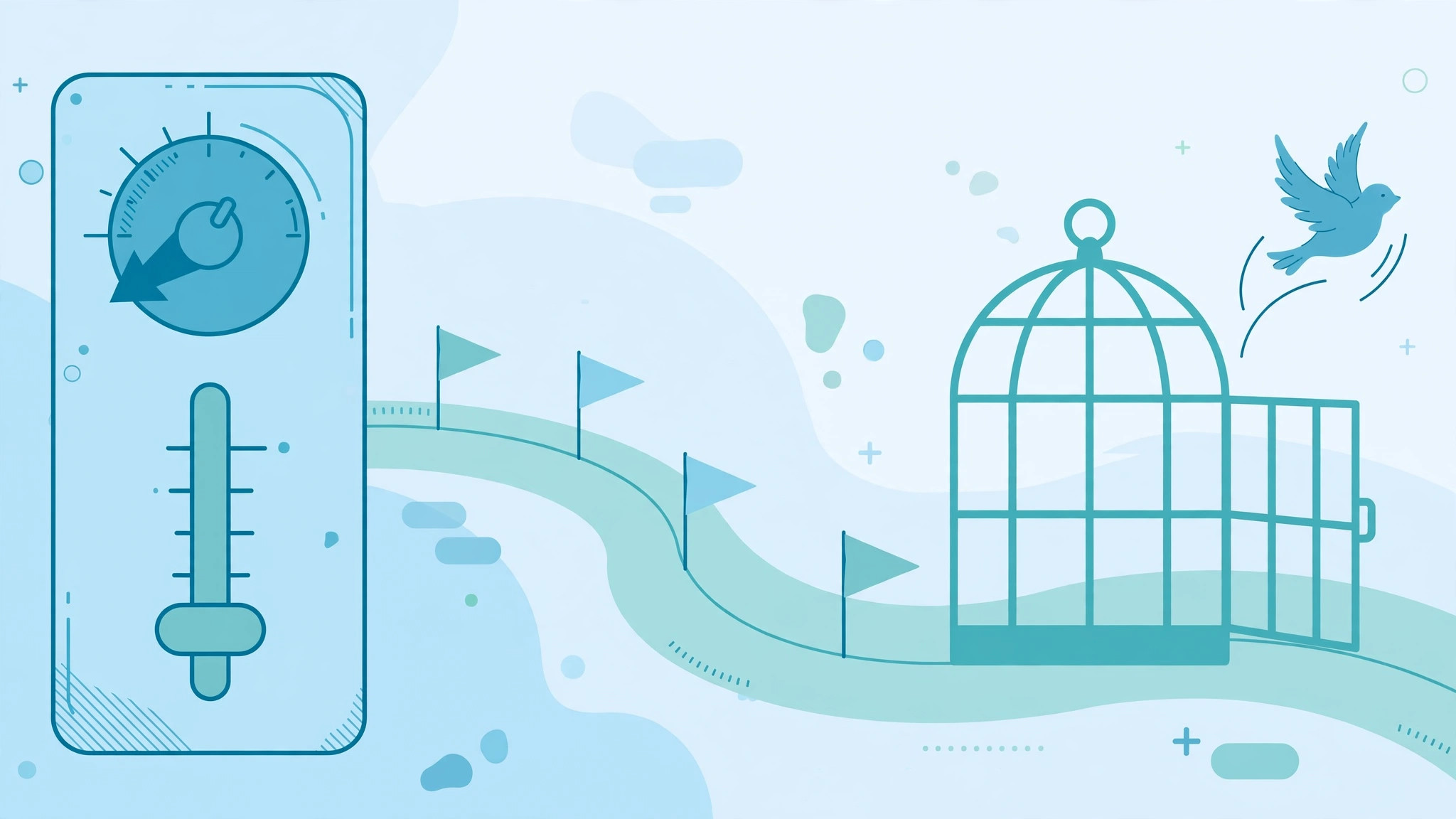
“Loosen over time” is easy to say and hard to do. So here’s a concrete framework — specific milestones that earn specific freedoms:
| Milestone (demonstrated, not just claimed) | Freedom it can earn |
|---|---|
| Comes to you about a weird message without being asked | Fewer spot-checks on messages |
| Handles a disagreement with a friend maturely | More private social apps |
| Self-regulates bedtime phone use for a month | Later or no Downtime |
| Asks before downloading, consistently | App approval → app notification only |
| Handles location check-ins responsibly for 6 months | Location sharing becomes mutual rather than monitored |
| Talks openly about online drama | Monitoring shifts to “available if needed” |
The key word is demonstrated. Not “I’m mature enough, trust me” — actual behavior over time. And the freedoms should be named in advance: “When you show me X for Y weeks, we’ll do Z.” That turns the whole system into a game your teen can win, instead of a cage they resent.
One more principle: loosening is a ratchet, not a pendulum. If you loosen and things go badly, you can tighten again — calmly, without “I told you so.” “We tried more freedom and it didn’t work yet. We’ll try again in three months.” That’s parenting, not punishment.
What To Do When You Find Something Worrying

This is the moment monitoring exists for. Handle it well and the whole system is validated. Handle it badly and you’ve burned trust for nothing.
Step 1: Pause. Don’t confront in the heat of the moment. Read it twice. Consider: is this actually dangerous, or just teen life that looks alarming out of context?
Step 2: Assess the severity honestly.
- Experimentation, mild rule-breaking, drama: conversation territory. Not a monitoring crisis.
- Bullying (as victim or participant), risky contacts, explicit content pressure: serious — act promptly but calmly.
- Predatory contact, threats, self-harm signals: urgent — act now, involve other adults (school, counselor, authorities) as appropriate.
Step 3: Lead with care, not with the evidence. “I saw something that worried me because I care about you” lands completely differently from “I caught you.” The first invites honesty. The second invites defensiveness.
Step 4: Don’t reveal more surveillance than necessary. You don’t need to detail exactly how you found something. “I came across something concerning” is enough. Preserving some ambiguity about methods is fine — the point is the conversation, not the forensics.
Step 5: Solve it together where possible. Especially with bullying or peer drama, involving your teen in the response (“What do you think we should do about this?”) builds the exact judgment you’re trying to develop.
Step 6: Adjust the system, not just the incident. If monitoring caught something important, that’s data: the current settings were right. If it caught nothing for a year, that’s also data: maybe it’s time to loosen.
What a Week of Responsible Monitoring Looks Like
Philosophy is nice. Here’s what it looks like on a random Tuesday.
Monday: You glance at the weekly screen-time summary over coffee. Nothing alarming. You don’t open the monitoring dashboard at all — there’s no reason to.
Wednesday: Your 13-year-old mentions a new friend from a gaming server. You listen, ask a couple of curious (not interrogating) questions, and later do a quick check of new contacts. Everything looks normal. You say nothing — because nothing needed saying.
Friday: An alert flags a message containing a flagged keyword. You read the context: it’s your teen quoting a meme to a friend, harmless. You dismiss it. No confrontation, because there was nothing to confront.
Sunday: Your monthly check-in. “Anything weird online this month?” Your teen mentions someone being rude in a group chat. You talk through it — block, report, or ignore? They decide, with your guidance. You note to yourself: the system is working. Not because the app caught something, but because your kid told you something.
Notice what didn’t happen: no daily dashboard reviews, no confrontations over trivia, no gotcha moments. The monitoring ran quietly in the background. The relationship did the heavy lifting.
That’s the whole model. The app is the smoke detector. You’re the fire department. And most weeks, there is no fire.
Answering Your Teen’s Toughest Objections
They will push back. Here’s how to answer honestly — because “because I said so” stops working around age 12.
“You don’t trust me!” “I do trust you. I don’t trust the internet — the strangers, the algorithms designed to keep you scrolling, the friends who might pressure you. I’m not monitoring you. I’m monitoring the environment around you until you’ve got the experience to handle it alone.”
“None of my friends’ parents do this!” “Some do and you don’t know about it. Some don’t, and that’s their choice. Our family does safety differently — and honestly, a lot of those parents will wish they’d paid more attention when something goes wrong. I’d rather be the careful parent.”
“I’m not a baby anymore!” “You’re right — and that’s exactly why the rules keep changing. Remember when you had full app approvals and now you don’t? That’s the system working. Keep showing good judgment and it keeps loosening. You’re not stuck; you’re progressing.”
“This is an invasion of privacy!” “Privacy is something you earn with responsibility, and you’re earning it. Right now I can see [X]. In six months, if things keep going well, it’ll just be [Y]. I’m not interested in reading your diary — I’m interested in making sure no one dangerous gets close to you.”
The pattern in every answer: acknowledge the feeling, explain the reasoning, point to the path forward. Teens don’t need you to win the argument. They need to see the system is fair, finite, and tied to their own growth.
The iSpyer Promise
We built this site on a bet: that parents are hungry for honesty in a niche full of hype. Every “100% undetectable!!!” claim, every fake review, every fear-stacked sales page made us more convinced the honest approach would win.
So here’s our promise, in writing:
- We’ll tell you what apps can’t do. If a feature doesn’t work as advertised, you’ll read it here first.
- We’ll never sell you surveillance of another adult. Our content is for parents protecting children — not for spying on partners. We’ll say so directly whenever the topic comes up.
- We’ll treat your intelligence with respect. No fake urgency, no invented testimonials, no “shocking” headlines. Just tested facts and clear verdicts.
- We’ll disclose our business model plainly. We earn commissions when you buy through our links. It doesn’t change our scores or our verdicts. (More on exactly how we test: How We Test & Review Apps.)
- We’ll put the relationship first. Every guide we write assumes you love your kid and want to stay close to them. The tools serve that — never the reverse.
“Responsible Monitoring, For Healthy Relationships” isn’t a tagline we picked for marketing. It’s the standard we hold our own content to. If we ever fall short, we want to hear about it.
Frequently Asked Questions
👉 Start With the Tool We Trust Most
Philosophy matters — and so does the tool. mSpy is our highest-rated monitoring app: deepest features, most reliable syncing, 14-day money-back guarantee.
👉 Prefer to Test First?
Not ready to commit? Start mSpy’s trial and evaluate it on your own terms before spending anything significant.
The Bottom Line
Your child will one day manage their entire digital life without you. Every year of parenting is preparation for that day.
Responsible monitoring is how you prepare them: supervision that’s honest, proportional, and temporary by design. Talk first. Monitor transparently. Loosen as they grow. And keep the real goal in sight — not a perfectly controlled teenager, but a young adult who makes good choices when nobody’s watching.
That’s what “for healthy relationships” means. The technology is just scaffolding. The relationship is the building.
