

Cyberbullying: Parent’s Guide & Warning Signs (2026)
Nobody wants to think about their child being bullied — and the idea of it happening silently, on a screen, while you’re in the next room, is genuinely unsettling. Take a breath. Here’s what you need to know first: cyberbullying is common, it is survivable, and parents who respond calmly and quickly make an enormous difference in how much it hurts and how fast it stops. This guide covers the warning signs, exactly what to do step by step, and how to support your child through it.
The 60-second version: cyberbullying is repeated hurtful behavior through phones and social media — mean messages, exclusion, embarrassing photos shared without permission. Watch for secrecy around devices, emotional crashes after phone use, and avoiding school. If it happens: stay calm, save evidence (screenshots), block, report to the platform and school, and support — don’t punish. Most cases stop quickly once an adult intervenes early. For the visibility layer — keyword alerts that flag bullying language in messages — Parentaler is our parental-first pick, from ~$10.17/mo annual.
🛡️ Our Parental-First Pick: Parentaler
Keyword alerts flag bullying language and concerning messages before your child has to find the words to tell you. App blocking, web filtering, and location alerts included. 14-day money-back guarantee.
What Cyberbullying Actually Looks Like in 2026
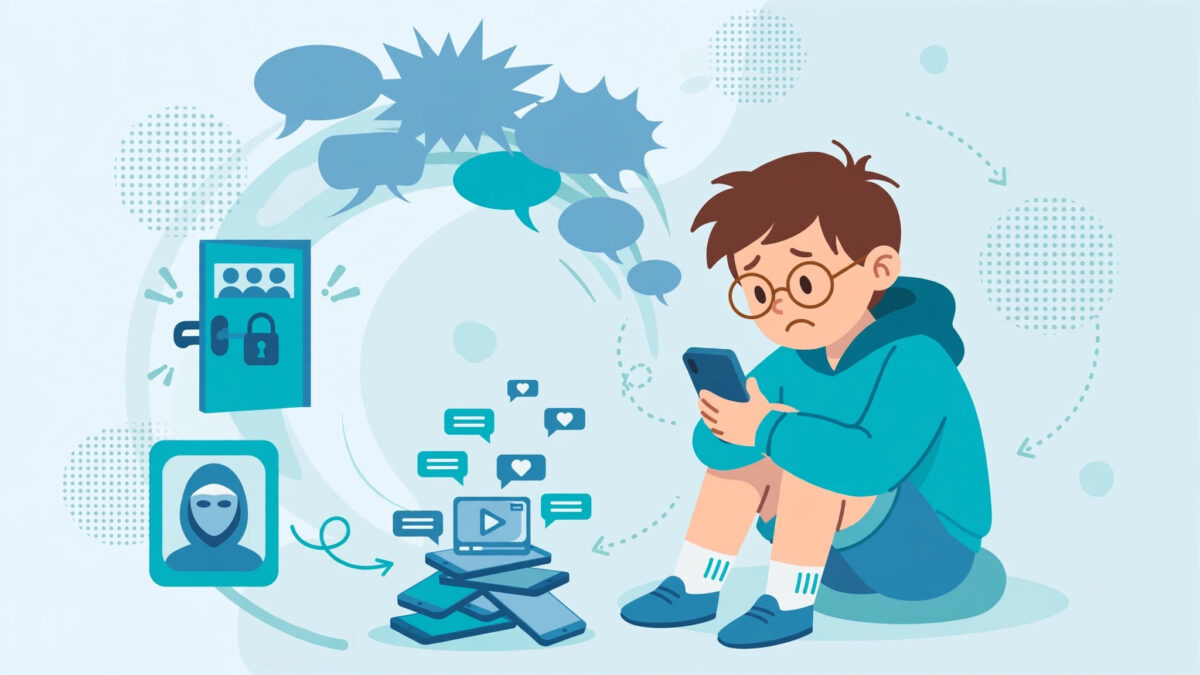
Forget the old image of a single mean text. Modern cyberbullying takes several forms, and recognizing the shape helps you respond to the right problem:
Direct harassment. Mean, threatening, or humiliating messages sent straight to your child — texts, DMs, comments. The most visible form, and often the easiest to document.
Exclusion. Being deliberately left out of group chats, gaming squads, or online friend groups — then watching the fun happen without them. Invisible to adults, devastating to kids. If your child suddenly “doesn’t want to play anymore” with a group they loved, ask gently.
Impersonation. Someone creates a fake account in your child’s name (or hijacks theirs) and posts embarrassing things. Less common, more damaging — and a sign to involve the school or platform immediately.
Outing and trickery. A “friend” coaxes your child into sharing something private — a secret, an embarrassing photo — then shares it. This overlaps with sexting pressure; handle it with extra care and zero shaming.
Pile-ons. A single incident (an awkward video, an unpopular opinion) snowballs as dozens of kids comment, share, and meme it. Speed matters here — the faster an adult intervenes, the smaller the audience.
The key difference from old-school bullying: it doesn’t stop at the school gate. There’s no safe walk home from a group chat. That’s why the emotional impact can be heavier — and why your response speed matters more than it did a generation ago.
Warning Signs: The Table Every Parent Should Save
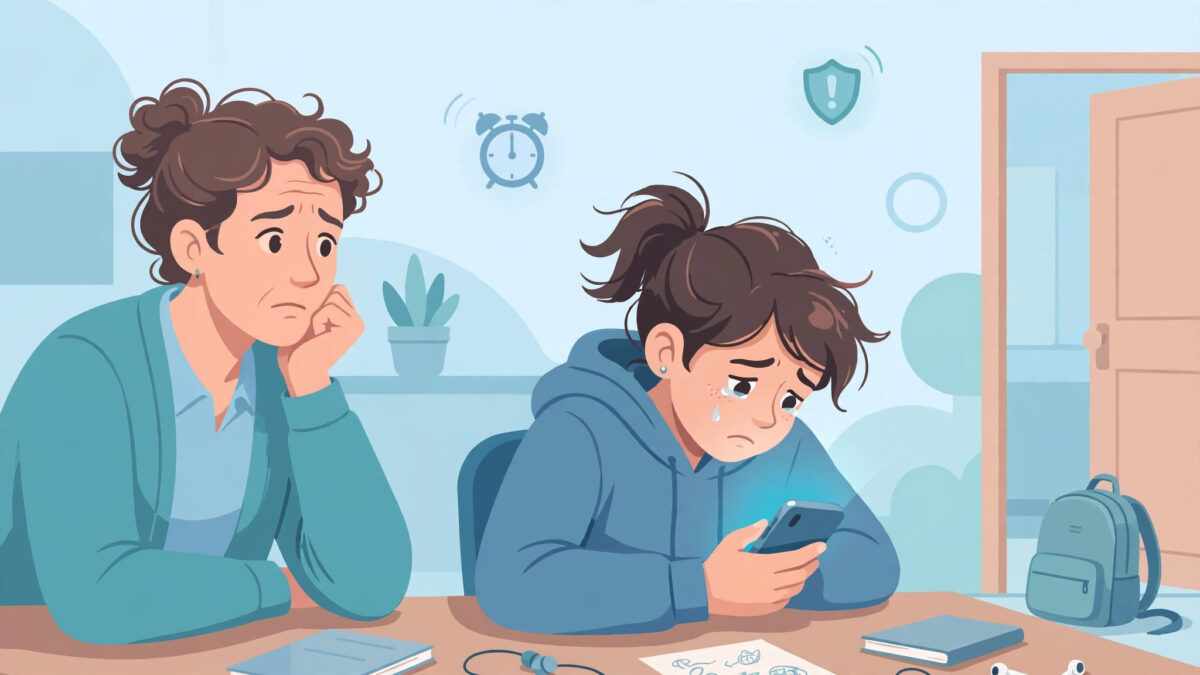
Kids almost never open with “I’m being cyberbullied.” They leak it through behavior. Look for patterns over two weeks, not single bad days:
| Warning sign | What it may mean | Your first move |
|---|---|---|
| Hides screen, new passwords, takes phone everywhere | Hiding hurtful messages — or just teen privacy | “I’ve noticed the secrecy — is everything okay online?” (curious, not accusing) |
| Cries or shuts down after phone use | Just saw something cruel | Name it gently: “You seem upset since you were on your phone” |
| Doesn’t want to go to school | Bullying crossing into real life | Talk, then email the teacher/counselor if it persists |
| Deleted social apps suddenly | Trying to escape the harassment alone | Don’t celebrate the deletion — ask what drove it |
| Stomachaches, headaches, trouble sleeping | Stress manifesting physically | Pediatrician + conversation, not just tech fixes |
| Grades slipping | Can’t concentrate through the anxiety | Look at the whole picture with teachers |
| Talks about themselves negatively | Internalizing the bully’s words | Counter it directly and consider counseling |
| New anxiety about specific apps or group chats | Knows exactly where the bullying happens | “Which app feels worst right now?” — then act on that one |
One critical note: some of these signs also fit depression, anxiety disorders, or other struggles. You’re not diagnosing — you’re opening a door. If the signs persist after the online situation improves, loop in a professional.
What To Do: The Step-by-Step Response Plan

When you learn your child is being cyberbullied, do these in order. Print this section or save it — in the moment, you won’t want to think from scratch.
Step 1: Stay calm and believe them
Your reaction is the whole game. Thank them for telling you. Say “I’m glad you told me” and “this is not your fault” — before anything else. If you explode, cry uncontrollably, or immediately grab their phone, the lesson they learn is never tell again. You can feel your feelings later, privately.
Step 2: Document everything before you touch anything
Screenshots of messages, usernames, timestamps, URLs. Save originals — don’t just photograph a screen if you can screenshot directly. Note dates. If it’s happening across platforms, document each one. Do this before blocking anyone, because blocking can delete the evidence trail on some apps.
Step 3: Don’t retaliate — and stop your child from retaliating
The urge to message the bully (or their parents) immediately is strong. Resist it. Retaliation escalates, creates new evidence against your child, and feels terrible the next day. Tell your child the same: no reply, no subtweet, no revenge post. Silence plus documentation wins.
Step 4: Use the platform tools — block and report
Every major platform has block and report functions:
- Block the bully’s accounts on every platform where contact happens.
- Report the content and the account — harassment, bullying, and (for images) non-consensual content categories exist everywhere.
- Tighten privacy: switch accounts to private, remove unknown followers, turn off message requests from strangers.
Do this together with your child where possible — it restores a sense of control, which bullying steals.
Step 5: Involve the school — in writing
If the bully is a classmate (it usually is), the school needs to know. Email the counselor or principal — in writing, with dates and a brief summary. Schools have anti-bullying policies and legal obligations; a written record makes them act. Ask specifically: “What is your process for this, and what timeline should I expect?”
Step 6: Know when it’s a crime
Most cyberbullying is cruel, not criminal. It crosses the line when there’s: credible threats of violence, stalking behavior, hate-crime elements, or non-consensual sharing of intimate images (illegal in most jurisdictions, including when minors share images of minors). When in doubt, save everything and ask law enforcement — they’d rather hear about it early.
Step 7: Support recovery — the long game
The bullying stopping isn’t the same as your child recovering. Check in for weeks, not days. Watch for lingering anxiety, reluctance to rejoin activities, or self-blame (“maybe I deserved it” — counter this explicitly and repeatedly). If they’re stuck, a few sessions with a counselor who understands adolescent social dynamics can help enormously. That’s strength, not weakness — frame it that way.
👀 A Quieter Way to Watch: Eyezy
Not every child will tell you when bullying starts. Eyezy runs keyword alerts on messages and social apps — bullying language, slurs, threats — so you get a heads-up while there’s still time to act early. From ~$9.99/mo annual, with a demo to explore first.
Supporting Your Child Emotionally (What Actually Helps)
The practical steps stop the bullying. These steps heal the child:
Separate their worth from the bully’s words. Bullies pick targets for reasons that have nothing to do with the target’s value — often it’s about the bully’s own insecurity or social positioning. Say it plainly: “This says everything about them and nothing about you.” Repeat it. Kids need to hear it more than once.
Don’t minimize, don’t catastrophize. “Just ignore it” minimizes. “Your life is ruined” catastrophizes. The middle path: “This is genuinely hard, and it’s also fixable. Here’s what we’re going to do.” Calm confidence is contagious.
Let them have feelings without fixing them instantly. Sometimes your child needs you to listen for ten minutes before you start solving. Ask “do you want advice or do you want me to just listen?” — teens especially appreciate being asked.
Rebuild the offline world. Bullying shrinks a child’s world to the screen. Counter it deliberately: the sport they like, the friend who’s kind, the hobby that has nothing to do with phones. Real-world belonging is the antidote to online exclusion.
Watch yourself. If you find yourself checking their phone obsessively, interrogating daily, or treating every notification as an emergency — you’re transferring your anxiety to them. Process your fear with another adult, not your child.
Prevention: Making Your Child a Harder Target
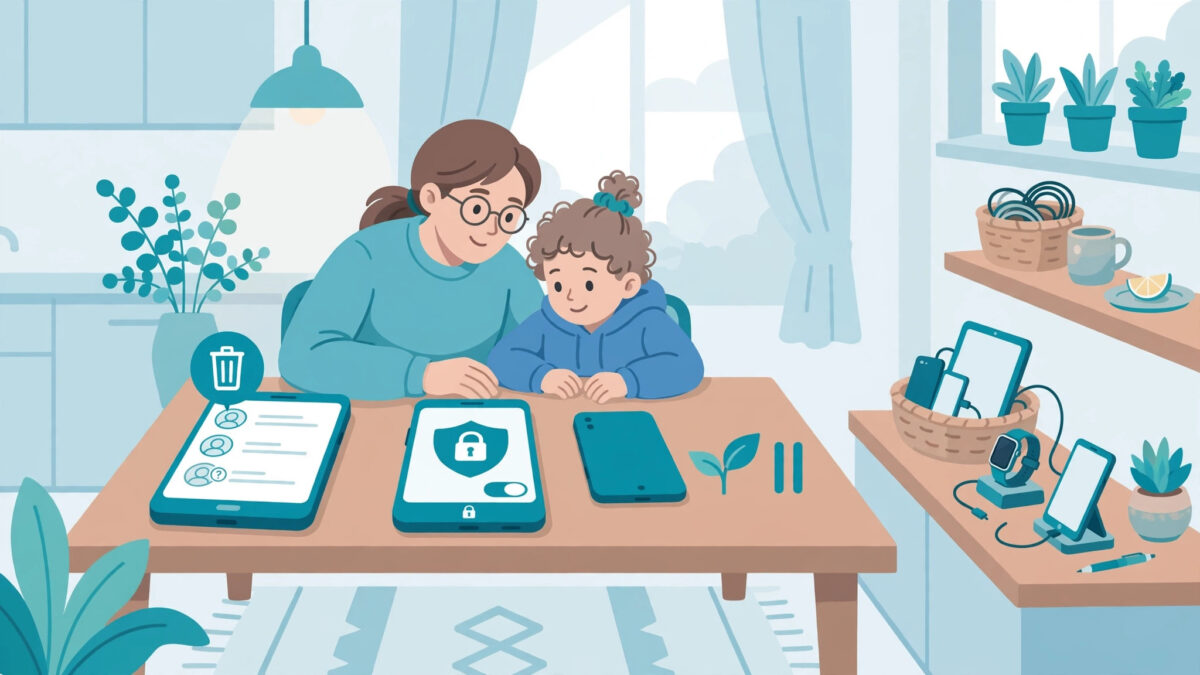
You can’t bully-proof a child. But you can lower the odds and shorten the duration:
Teach the screenshot rule early. Anything sent can be screenshotted and shared — so think before sending, and never forward someone else’s private content. Kids who internalize this both bully less and get hurt less.
Practice the pause. “When something online makes you feel bad, put the phone down for ten minutes before responding.” Most escalation happens in the heated first minutes. The pause is a superpower.
Curate the friend list. Once a year, sit together and prune: unknown followers removed, private accounts on, message requests from strangers off. Make it routine maintenance, like a dental checkup — not a punishment.
Keep the devices in shared spaces for as long as it’s age-appropriate. Not as surveillance — as presence. Bullies thrive in isolation; a kid doing homework at the kitchen table is simply harder to torment at midnight.
Role-play responses. “What would you do if someone posted an embarrassing photo of you in the group chat?” Kids who’ve rehearsed an answer — screenshot, tell a parent, don’t retaliate — execute it under stress. Kids who haven’t, freeze.
Know the apps. You don’t need accounts everywhere, but you should know which apps your child uses and roughly how each one works. Ask them to show you. Our social media monitoring guide and Snapchat monitoring guide cover the big ones.
When It’s Your Child Doing the Bullying
This is the section nobody wants to need. If you discover your child is bullying someone else:
Don’t lead with rage. Shame shuts down honesty. Start with “I found something that concerns me. Help me understand what happened.” You need the full picture before you decide consequences.
Teach impact, not just rules. “How do you think they felt reading that?” Many kids genuinely don’t connect text on a screen to a real person’s pain — especially in group dynamics where everyone’s piling on. Make the connection explicit.
Set a clear, proportional consequence — and follow through. Losing the specific app for a set period is more instructive than a vague grounding. Require a genuine apology where appropriate (not a forced one — those backfire).
Look underneath. Kids who bully are often being bullied elsewhere, struggling socially, or dealing with something at home. The behavior needs a consequence and the cause needs attention. If it’s part of a bigger pattern, consider counseling — for them, not as punishment.
Involve the school if it happened in that context. Cooperate fully. The other family is living your nightmare in reverse.
When to Seek Help (Beyond the Family)
Bring in professionals when:
- Your child expresses hopelessness or talks about self-harm. Every time, without exception. Contact your pediatrician, a mental health professional, or a crisis helpline immediately.
- The bullying involves threats, stalking, or image-based abuse. Law enforcement territory — save evidence first.
- The school isn’t acting. Escalate in writing: counselor → principal → district. Document every contact.
- Your child’s functioning is deteriorating — can’t sleep, can’t eat, can’t go to school — for more than two weeks despite the bullying stopping. That’s a mental health professional’s domain.
- You’re in over your head. That’s not failure. A family therapist who works with adolescents can do in weeks what might take you months of guessing.
Practice Scenarios: What Would You Do?
Reading a plan is one thing; using it under stress is another. Walk through these three scenarios in your head — or better, talk through one with your child this week. Rehearsed parents respond well; unrehearsed parents panic.
Scenario 1: The group-chat pile-on. Your 13-year-old shows you her phone, crying. Someone posted an unflattering photo of her in the class group chat, and twenty kids are now riffing on it with laughing emojis. She’s begging you not to “do anything because it’ll make it worse.”
What to do: validate first (“that looks really painful — I’m sorry this is happening”), then screenshot everything with her watching so she sees you’re competent, not panicked. Ask her what outcome she wants — often it’s “make it stop,” not “punish them.” Then: report the photo to the platform, message the group admin or a trusted teacher privately (not the whole chat), and have her mute the chat for 24 hours while you handle it. The 24-hour mute is the underused move — it breaks the doom-scroll cycle while adults work.
Scenario 2: The anonymous account. Your 15-year-old son is getting cruel DMs from an account with no profile photo and three followers. He doesn’t know who it is. He’s angry and wants to “find out who it is and deal with them.”
What to do: channel the anger into documentation, not confrontation. Screenshot the profile, the messages, and any linked accounts. Report the account for harassment — platforms can connect anonymous accounts to real ones behind the scenes, and repeated reports from the same device fingerprint get actioned. Block it. Then have the harder conversation: anonymous cruelty is almost always someone he knows. If it continues from new accounts, that’s the escalation point for the school — anonymous sustained harassment of a minor is something counselors and, if needed, police take seriously.
Scenario 3: The exclusion he can’t prove. Your 11-year-old has stopped wanting to go to soccer practice. When you ask why, he shrugs. You later learn from another parent that the team group chat moved to a new chat — without him — and the jokes about him in the old one got mean.
What to do: this one’s quieter and easier to miss, which is exactly why it hurts longer. Don’t storm the coach. Start with your son: “I heard the team chat changed and you weren’t included. That must feel awful.” Believe the feeling before investigating the facts. Then a calm email to the coach — not accusing, just informing: “I wanted you to be aware of some group-chat dynamics affecting my son’s experience on the team.” Coaches deal with this constantly and usually welcome the heads-up. Meanwhile, protect the rest of his week: one-on-one time with a kind friend, the hobby that has nothing to do with the team.
The thread through all three: your calm is their safety. Kids borrow their parents’ nervous systems in a crisis. If you’re steady, documented, and quietly effective, they learn that problems are solvable — which is the real lesson underneath all of this.
Frequently Asked Questions
The Bottom Line
Cyberbullying feels like a modern nightmare, but the response playbook is timeless: stay calm, believe your child, document, block, report, support. Speed matters — most cases shrink fast once a competent adult steps in. And the single best long-term protection isn’t software at all: it’s a child who knows, bone-deep, that they can tell you anything without being punished for it.
Build that trust now, keep this plan somewhere you can find it, and add the visibility layer — parental controls plus keyword-alert monitoring — so nothing festers in silence. Your kid is going to be okay, especially with a parent who’s reading guides like this one.
🔍 Deeper Visibility When You Need It
For the full picture — social DMs, deleted messages, keyword alerts, location history — mSpy remains the deepest monitoring app we tested. Try the trial path or explore the demo, backed by a 14-day money-back guarantee.
Legal note: install monitoring apps only on devices you own or your minor children’s devices in your care. This article contains affiliate links; we may earn a commission at no extra cost to you. Pricing changes often — confirm live pricing at checkout.
