How We Test & Review Apps
Quick answer: We buy every app with our own money, install it on real phones we own, and test it for 14–30 days before writing a word. We verify advertised features one by one, measure sync speed and battery impact, test customer support with real questions, and even test the refund process. Our scores can’t be bought — here’s exactly how they work.
Every review site claims to “test thoroughly.” Most don’t. They rewrite the vendor’s feature list, slap on a star rating, and call it a review.
We do it differently — slower, more expensive, and more honest. This page documents our entire methodology: what we buy, what we install, what we measure, how we score, and how we handle the money side (because yes, we earn commissions, and you deserve to know exactly how that works).
If you ever wonder “why should I trust this review?” — this is the answer.
Our Testing Process, Step by Step

Every app we review goes through the same pipeline. No shortcuts, no exceptions.
Step 1: We buy it with our own money
We purchase every app at retail price, the same way you would. No review copies, no vendor-provided demo accounts, no “partner” access.
Why does this matter? Because the buying experience is part of the product. We see the real checkout flow, the real upsells, the real pricing (not the “reviewer’s special” price). If the checkout is confusing or the pricing is misleading, you’ll read about it — because we lived it.
Step 2: We install it on real devices we own
Our test bench includes:
- Android phones across brands (Samsung, Pixel, Xiaomi) and Android versions — because permission behavior and battery optimization differ wildly by manufacturer.
- iPhones on current iOS — for testing the iCloud-based monitoring method, 2FA flows, and sync reliability.
- A mix of old and new devices — because not every family has this year’s flagship, and apps should work on real-world hardware.
We don’t test on emulators for final verdicts. Emulators don’t have real battery drain, real notification behavior, or real-world network conditions.
Step 3: We run it for 14–30 days minimum
No same-day reviews. An app that works beautifully on day one can fall apart on day twelve — sync delays creep in, the app gets killed by battery optimization, a “weekly report” never arrives.
Our minimum test windows:
- 14 days for straightforward parental-control apps with simple feature sets.
- 30 days for full monitoring suites (mSpy, Eyezy, and similar) — because sync reliability and long-term stability are the whole ballgame.
During the test period, we use the monitored device the way a real kid would: messaging, social apps, location changes, app installs and removals. A monitoring app that only works in a lab isn’t a monitoring app.
Step 4: We verify every advertised feature, one by one
We take the vendor’s feature list and check each claim against reality:
| What we check | How we check it |
|---|---|
| Message monitoring (WhatsApp, SMS, etc.) | Send test messages, verify they appear in the dashboard, measure delay |
| Call logs | Place test calls, check log completeness and accuracy |
| GPS location | Move the device, compare reported vs actual location |
| Geofencing alerts | Set test zones, cross boundaries, time the alerts |
| Keylogger | Type test strings, check capture accuracy |
| Browser history / web filtering | Visit test sites, verify logging and blocking |
| Screen time / app blocking | Set limits, attempt violations, verify enforcement |
| Social media (Instagram, Snapchat, TikTok) | Post, message, and interact; verify what the dashboard shows |
| Stealth / hidden mode | Check app visibility, battery usage anomalies, data consumption |
| Alerts and notifications | Trigger every alert type, measure delivery time |
When a feature doesn’t work as advertised, we say so — specifically. “WhatsApp monitoring worked on Android but captured only notifications on our test setup” is more useful than “some features may vary.”
Step 5: We measure what vendors don’t advertise
The spec sheet never mentions these, but they determine whether you’ll actually keep using the app:
- Sync delay: How long between something happening on the phone and appearing in the dashboard? We measure in minutes across a week. Anything consistently over 30 minutes gets flagged.
- Battery impact: We compare battery drain with and without the app over 48-hour periods. An app that kills the phone by 3pm is an app your teen will delete (or that will get them in trouble at school).
- Data usage: Monitored phones on limited data plans need to know. We measure weekly MB.
- Dashboard usability: Can a non-technical parent actually use this? We score navigation, clarity, and mobile-friendliness.
- False positives: How often do keyword alerts or geofence notifications fire incorrectly? Alert fatigue is real — an app that cries wolf gets ignored.
Step 6: We test customer support with real questions
We contact support as ordinary customers — no “we’re reviewers” disclosure — with genuine questions:
- A setup question (how do I exempt the app from battery optimization on Samsung?)
- A billing question (how does the refund policy actually work?)
- A technical question (why isn’t WhatsApp syncing?)
We measure response time, answer quality, and whether the agent actually solved the problem. Support quality varies enormously in this niche, and it’s one of the strongest differentiators between apps.
Step 7: We test the refund process
If a vendor advertises a money-back guarantee, we test it. We request a refund within the guarantee window and document what happens: how easy it was, how long it took, whether we were pressured to stay.
This is the test most review sites skip — and it’s the one that matters most when an app doesn’t work out. A 14-day guarantee that requires three support chats and a retention script isn’t really a 14-day guarantee.
👉 Our Top-Rated App After All This Testing: mSpy
Across every round of testing, mSpy consistently scores highest — deepest verified features, most reliable syncing, responsive support, and a 14-day money-back guarantee we actually tested.
How Our Ratings Work
Our scores aren’t vibes. Each app is scored across fixed categories, and the weights are the same for every app.
| Category | Weight | What it measures |
|---|---|---|
| Feature depth | 25% | How many advertised features actually work as claimed |
| Reliability | 20% | Sync speed, uptime, consistency over the test period |
| Ease of use | 15% | Install difficulty, dashboard clarity, parent-friendliness |
| Value for money | 15% | Features per dollar vs competitors at the same tier |
| Support quality | 10% | Response time and resolution quality from real tickets |
| Honesty of marketing | 10% | Do the vendor’s claims match reality? (Penalizes hype) |
| Refund fairness | 5% | How the money-back guarantee actually performed |
A few things this system does deliberately:
It punishes hype. The “honesty of marketing” category exists because this niche is full of inflated claims. An app that promises 50 features and delivers 30 scores worse than an app that promises 25 and delivers 25 — even though the first app “does more.”
It weights reliability over feature count. A monitoring app that misses syncs is worse than useless — it creates false confidence. That’s why reliability (20%) outweighs raw features.
It can’t be gamed by vendors. The categories and weights are fixed and published here. A vendor can’t improve their score by being nice to us — only by building a better product.
Scores are re-tested quarterly. An app that was great in January can degrade by July (we’ve seen it happen — sync infrastructure changes, iOS updates break features). Our ratings reflect the current state, not a historical one.
What We Check That Others Don’t

A few items on our checklist that rarely appear in other reviews:
The 2FA trap. Many iCloud-based monitoring setups break the moment Apple prompts for two-factor authentication on the monitored device — which can alert the device user. We test exactly when and how 2FA interrupts monitoring, because it’s the most common real-world failure mode for iPhone monitoring.
Battery optimization kills. On Samsung and Xiaomi especially, aggressive battery management silently kills background monitoring apps. We test whether the app survives a week of normal use without special exemptions, then document exactly which exemptions are needed. If an app needs six settings changes to stay alive, that’s a finding.
The uninstall test. How easy is it for a tech-savvy teen to remove or disable the app? We don’t publish step-by-step bypass instructions (we’re not here to help kids evade their parents), but we do assess tamper-resistance as a category — because a monitoring app a 14-year-old can kill in 30 seconds isn’t doing its job.
Update breakage. We re-run core feature checks after major OS updates (new iOS, new Android version). Vendors are often slow to adapt, and we report the gap honestly rather than pretending everything still works.
How We Handle Money: The Full Disclosure
Let’s talk about the elephant on every review site: we earn commissions.
When you click our links and buy an app, the vendor pays us a commission — at no extra cost to you. This is how the site stays free and how we fund the testing (those 30-day test subscriptions add up).
Here’s what that does and doesn’t mean:
What it doesn’t change:
- Our test results. Commissions don’t make features work. An app either syncs reliably or it doesn’t, and we publish what we find.
- Our scores. The scoring categories above are fixed. No vendor can pay for a better score — the math doesn’t have a “we like them” variable.
- Our verdicts. We’ve published negative verdicts on apps with generous commission rates and positive verdicts on apps with modest ones. The Cocospy review is a good example — we told readers the service appears dead, which earns us exactly nothing.
What it does mean:
- We only review apps we’d consider recommending to a real parent. We don’t pad the site with reviews of apps we wouldn’t touch, just to collect clicks.
- When two apps are close, we may prefer the one with the better commission — openly. If App A scores 8.7 and App B scores 8.6, and App A also supports our work, we’ll rank App A first and say so. The scores are honest; the tiebreak is transparent.
- We disclose on every page. Every article with affiliate links carries a plain-language disclosure. No fine print, no burying it.
What we’d never do:
- Publish a positive review of an app we didn’t test.
- Hide a major flaw because the commission is good.
- Invent test results, quotes, or user testimonials. Everything we claim comes from our own test bench.
If our business model ever conflicts with honest reviewing, honest reviewing wins. That’s not just ethics — it’s strategy. In a niche full of hype, trust is the only durable advantage, and we’d be fools to trade it.
Our Update Cadence
This niche moves fast. Prices change monthly, iOS updates break features quarterly, and apps sometimes die entirely (again: Cocospy). Our content has to keep up.
- Pricing and specs: re-verified quarterly at minimum. Every review shows its last-verified date.
- Feature re-tests: core features re-checked after major OS releases.
- Full re-reviews: annually for major apps, or sooner if something significant changes (pricing overhaul, feature removal, company acquisition, security incident).
- Dead-app protocol: if an app stops working or the company goes dark, we update the review to say so prominently — we don’t quietly leave up a positive review of a dead product.
You’ll see “Last verified: [Month Year]” on every review. If that date is old, treat the review as stale — and tell us. Reader corrections are one of our best quality-control mechanisms.
How We Choose What to Review
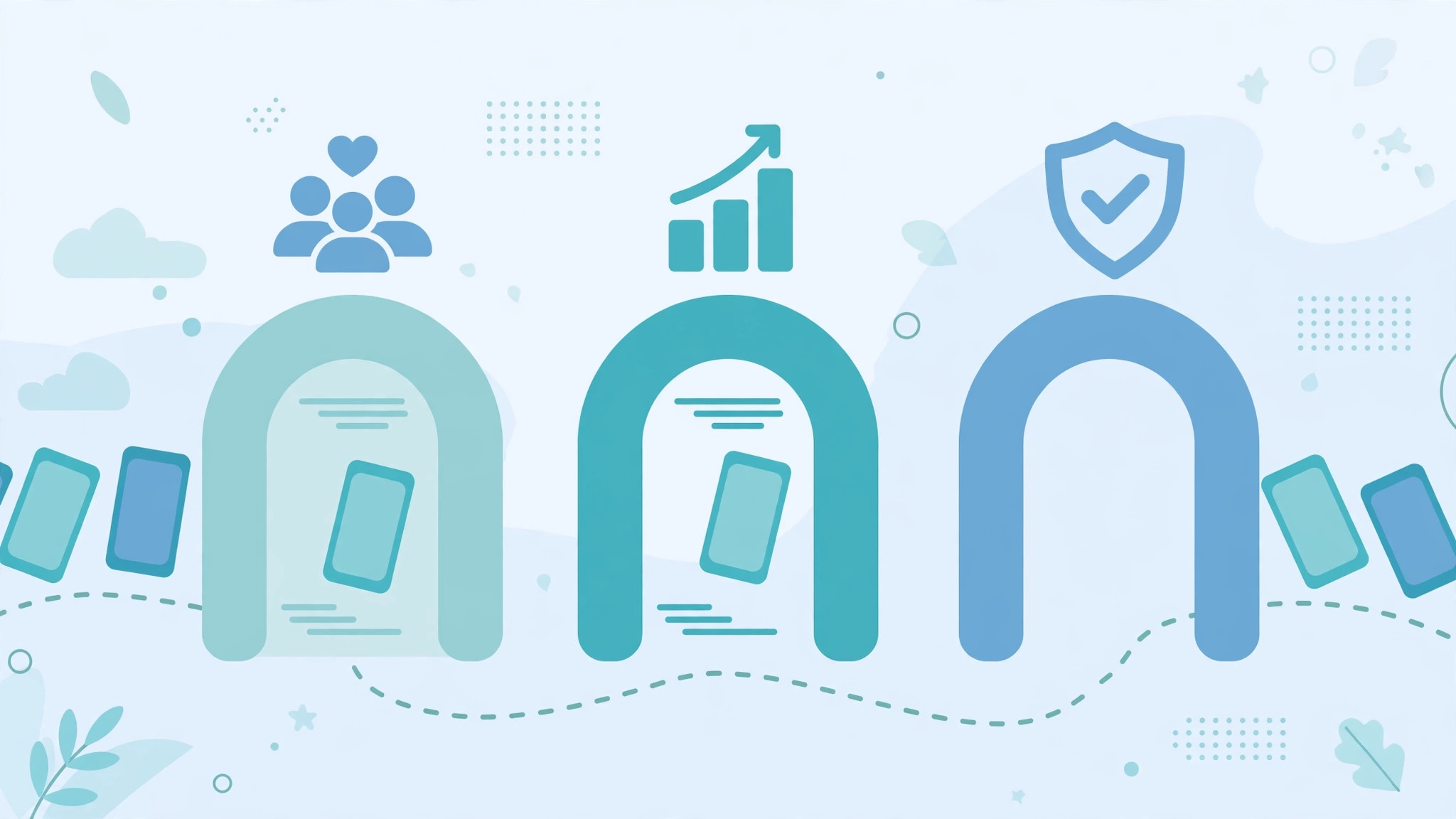
We can’t review everything — so how do apps get on our test bench? Three gates:
Gate 1: Reader demand. If parents keep searching for it or asking about it, it goes on the list. That’s how lesser-known apps like Spyx earned a full review — the search volume told us parents wanted answers.
Gate 2: Market significance. Major players (mSpy, Eyezy) get reviewed because they’re what most buyers compare. New entrants with aggressive marketing get reviewed because hype needs checking.
Gate 3: Safety relevance. If an app is heavily marketed to parents — or heavily misunderstood by parents — it qualifies regardless of size. A small app making big claims to worried parents deserves scrutiny.
What doesn’t get us to review something: vendor requests, PR pitches, or commission rates. We’ve declined “sponsored review” offers outright. If an app wants coverage, it can earn it the same way as everything else — by being something parents are actually considering.
We also remove reviews from active recommendation when warranted. If an app dies, gets acquired by a shady operator, or suffers a major security incident, the review gets updated with a prominent warning — or pulled from roundups entirely. Our best-apps lists only contain apps we’d recommend today.
Reader Corrections: How You Make Us Better
Here’s something most review sites won’t admit: our readers catch things we miss. And we want them to.
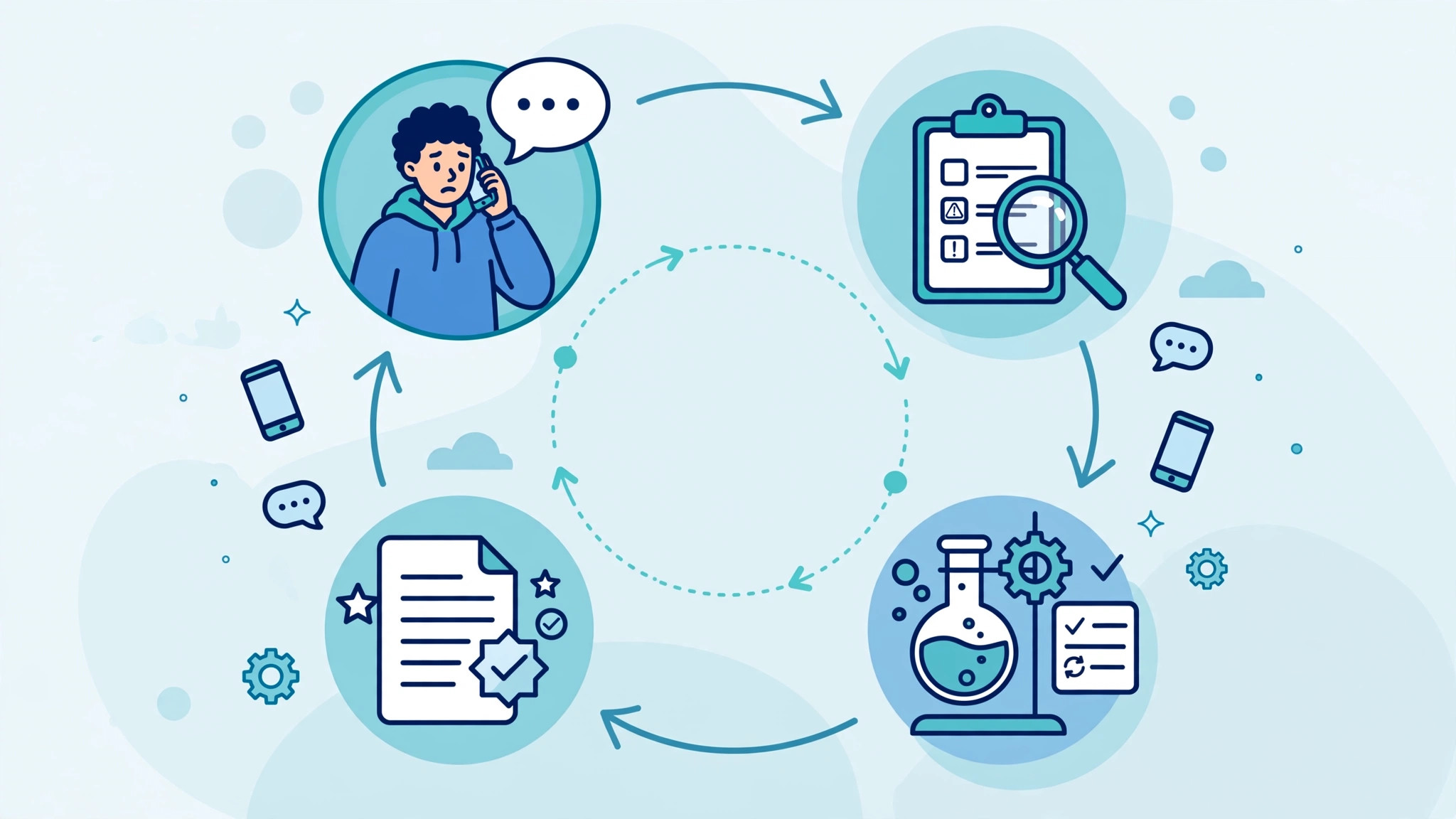
If your experience with an app doesn’t match our review — a feature stopped working, support went downhill, pricing changed — tell us. Reader reports go into a triage queue:
- Single report: noted, watched. One person’s issue could be a fluke or a setup problem.
- Multiple reports on the same issue: triggers a focused re-test of that specific feature.
- Pattern confirmed: the review gets updated, the score gets adjusted, and the change gets a new “last verified” date.
Some of our most valuable corrections have come from readers: a sync regression we hadn’t caught yet, a support policy change, a pricing tier that quietly disappeared. The test bench is thorough, but thousands of real-world users will always see more than one test team.
So consider this an open invitation: if we’re wrong about something, prove it. We’ll check, and if you’re right, we’ll fix it publicly. That’s how trust compounds.
Limitations of Our Testing
Honesty requires admitting what we can’t do:
- We can’t test every device. We cover the most common phones (Samsung, Pixel, Xiaomi, iPhone), but there are thousands of Android variants. Odd behavior on unusual devices is possible.
- We test as parents, not as forensic analysts. Our testing reflects real family use — not lab-grade security auditing. We don’t reverse-engineer apps or audit their data handling at a code level.
- Long-term effects are hard to measure. A 30-day test catches most issues, but some problems (gradual sync degradation, account bans) only appear over months. We update when readers report them.
- We’re US/EU-centric. Our legal and practical framing assumes broadly Western norms. Readers elsewhere should adapt accordingly — especially on the legal side (see Is It Legal?).
- Vendors change things. An app we praised in March might push a bad update in May. We re-verify quarterly, but there’s always a lag. The “last verified” date is your friend.
We’d rather tell you these limits upfront than have you discover them later. That’s the whole point of this page.
👉 Want the Short Version? Start Here
If you’d rather skip the methodology deep-dive and go straight to our top pick: mSpy is the highest-scoring app in our testing — verified features, reliable sync, tested refund process.
Frequently Asked Questions
👉 Ready to Pick? Our #1 Choice
mSpy leads our rankings after full testing: deepest verified feature set, most reliable syncing, support that actually answers, and a refund process we tested ourselves. 14-day money-back guarantee.
👉 Prefer a Budget-Friendly Pick?
Want strong features for less? Eyezy is our value alternative — solid monitoring at a lower price point, from ~$9.99/mo on annual plans.
The Bottom Line
Anyone can publish an opinion. We publish evidence — bought retail, installed on real phones, run for weeks, measured, and scored against fixed criteria.
That process is slow and expensive. It’s also the only reason our verdicts are worth anything. In a niche where hype is the default, “we actually tested it” shouldn’t be a differentiator — but it is, and we’re going to keep it that way.
If you ever spot something in a review that doesn’t match your experience, tell us. Reader reports trigger re-tests, and re-tests keep us honest. That’s the deal.